The Rise of Organic Minimalism: Why 2026 Is the Year We Finally Made Minimalism Feel Like Home

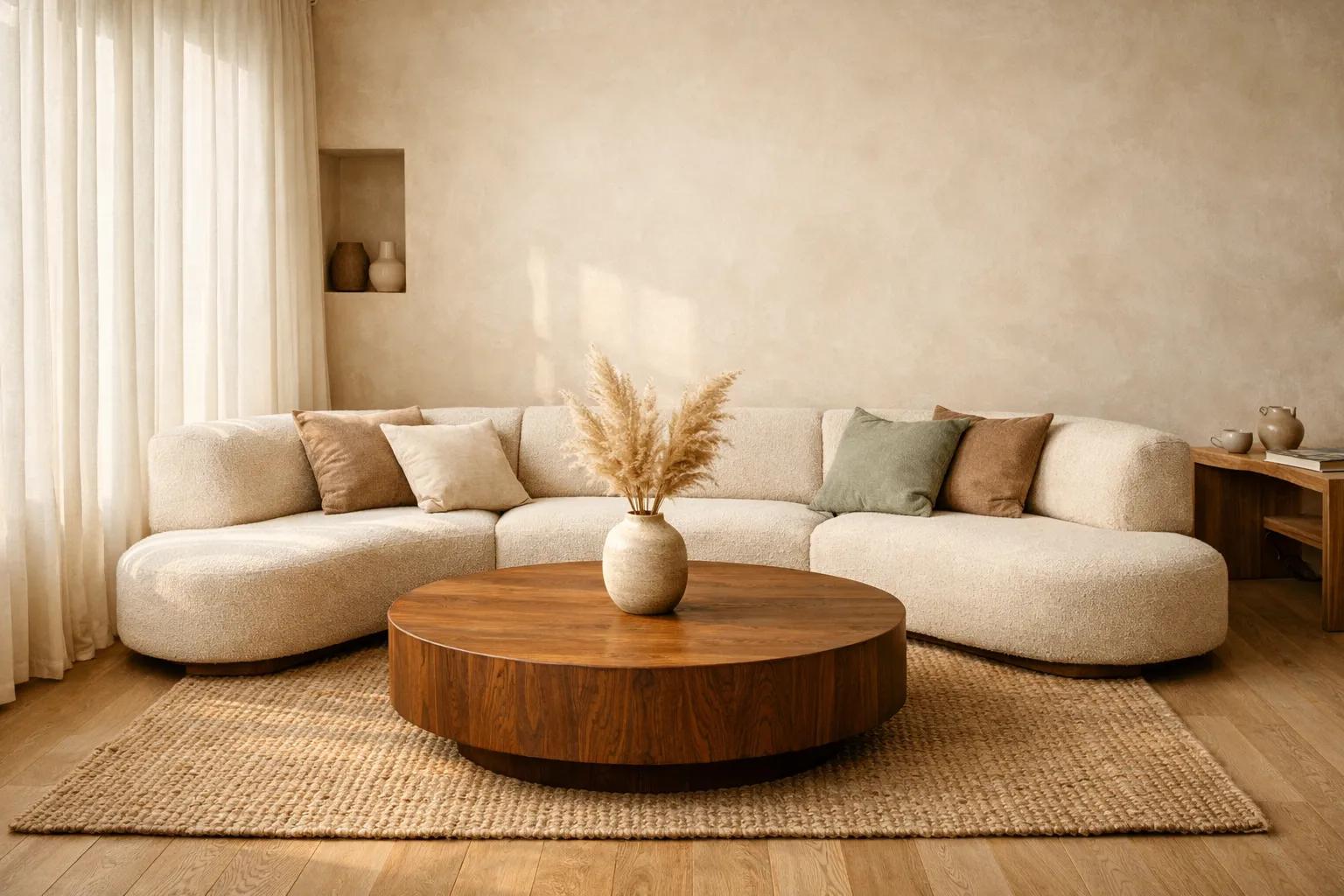
The short version: Organic minimalism keeps minimalism's calm and clean lines but swaps sterility for warmth: complex neutrals — cream, mushroom, terracotta, olive — instead of stark white, and tactile materials like solid wood, honed stone, linen, bouclé, and handmade ceramics instead of gloss and chrome. Texture does the work pattern used to do. Start with warm textiles, one or two handmade objects, a jute rug, and 2700K bulbs — the whole philosophy is fewer things, better things.
For years, minimalism told us to strip everything back. White walls. Clean lines. Nothing on the counters. The result? Rooms that looked incredible in photos but felt about as welcoming as an airport terminal.
In 2026, that era is decisively over. Designers, homeowners, and trend forecasters are all pointing in the same direction: toward a new aesthetic that keeps the calm simplicity of minimalism but wraps it in warmth, texture, and nature. It goes by several names — organic minimalism, warm minimalism, organic modern — but the philosophy is the same. Fewer things, but better things. Clean spaces, but ones that actually feel lived in.
This is not a subtle shift. It's the single biggest movement in interior design right now, and it's reshaping everything from living rooms to kitchens to bedrooms. Here's what you need to know — and how to bring it into your own home.
1. What Exactly Is Organic Minimalism?
At its core, organic minimalism blends two ideas that used to feel at odds: modern structure and natural softness. You still get the pared-back silhouettes and open layouts that made minimalism so appealing. But instead of cold grays and glossy surfaces, you'll find creamy neutrals, raw wood, stone, linen, and sculptural curves that make a room feel grounding rather than sterile.
Think of it as modern bones with nature layered on top. A room might feature a simple low-profile sofa, but it's upholstered in nubby bouclé fabric rather than smooth leather. The walls are a warm mushroom tone instead of stark white. A handmade ceramic vase sits where a chrome accessory used to be.
The key distinction is that texture does the work that pattern used to do. Bouclé, linen, jute, washed wood, honed stone — these materials add depth and visual interest without any of the visual noise. It's minimal, but it's never flat.
2. Why It's Dominating 2026
This trend didn't come out of nowhere. It's the natural evolution of several forces that have been building for years.
Post-Pandemic Comfort
After years of spending more time at home, people stopped optimizing their spaces for Instagram and started optimizing for how rooms actually feel. The question shifted from "Does this look good?" to "Does this space support the way I live?" Organic minimalism answers both.
Sustainability Takes Center Stage
The "fast furniture" era is being replaced by what designers call Slow Design. Homeowners are prioritizing artisanal pieces, handmade ceramics, vintage finds, and responsibly sourced materials that age beautifully over time. A solid oak table that develops patina over decades beats a flat-pack piece that ends up in a landfill in three years.
The Wellness Connection
Natural materials have a measurable effect on how we feel. Wood, stone, and greenery are all central to biophilic design — the evidence-backed practice of bringing nature into our built environments. In 2026, this isn't a niche concern. It's mainstream.
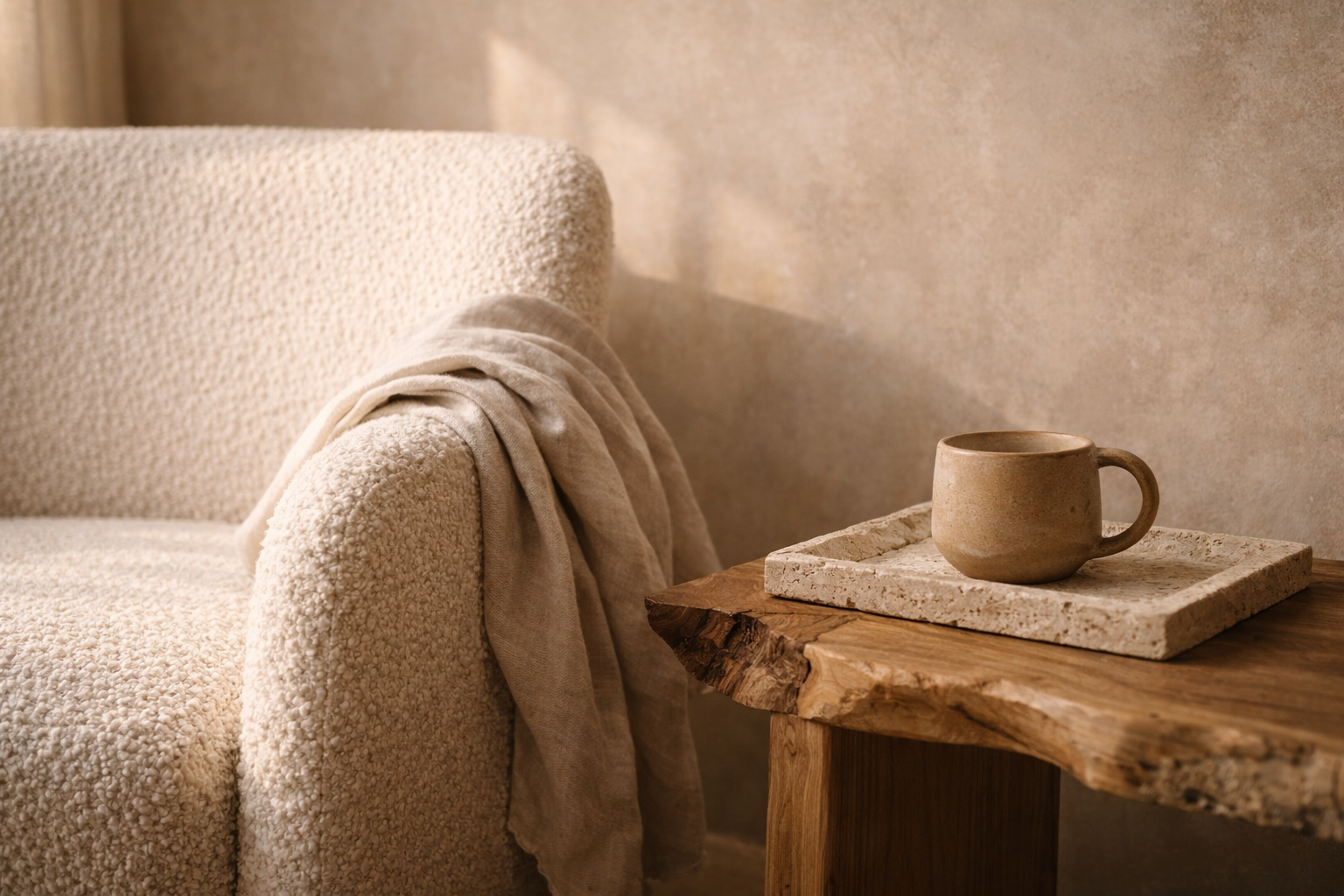 Layered natural textures — bouclé, linen, raw wood, and stone — are the hallmark of the organic minimalism movement.
3. The Color Palette: Goodbye Stark White, Hello Complex Neutrals
The 2026 color story is one of the most noticeable shifts. Cool whites and stark grays have given way to what designers are calling "complex neutrals" — warm, earthy tones that change beautifully as natural light moves through a room throughout the day.
The shades defining the year include warm creams and oatmeal, mushroom and taupe, terracotta and burnt caramel, olive and sage green, and muted teal as a sophisticated accent. These hues feel forgiving and livable. They complement natural materials rather than competing with them, and they make rooms feel cocooning and calm without being dark or heavy.
For those wanting a bolder direction, deep burgundy and oxblood are emerging as grounding accent tones in studies and living rooms, bringing a sense of warmth and richness that cool-toned rooms never could.
4. Materials That Matter: What to Reach For
If the old minimalism was defined by glass, steel, and high-gloss lacquer, organic minimalism is defined by materials you want to reach out and touch.
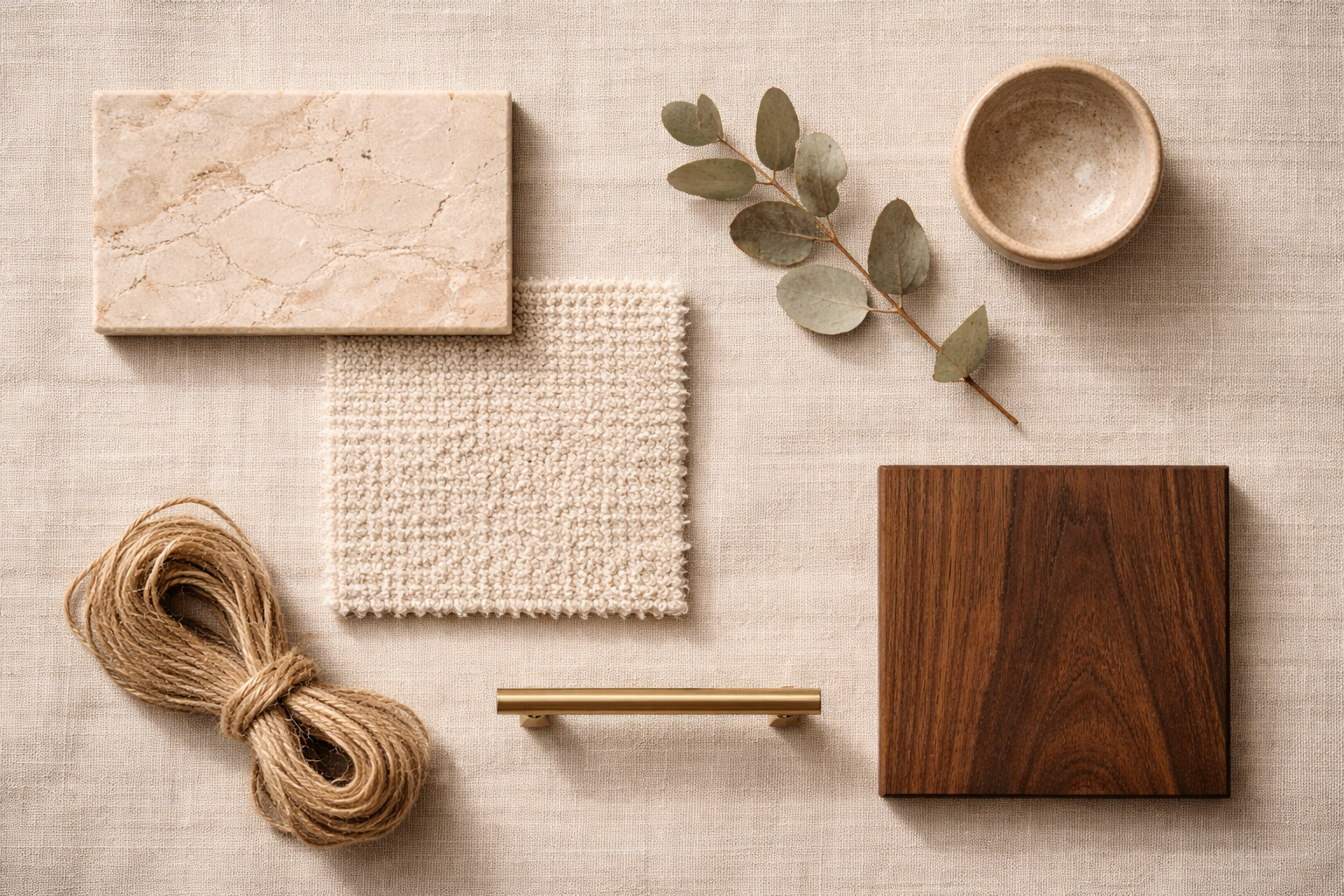
Solid wood, honed stone, linen, and handmade ceramics replace the cold surfaces of earlier minimalist design.
The materials leading the charge include solid wood in rich, warm tones (walnut, oak, and dark-stained varieties are especially popular), honed natural stone with visible veining, linen and bouclé for upholstery and soft furnishings, handmade ceramics and clay vessels, jute and sisal for rugs and woven accents, and brushed or patinated metals like bronze and aged brass.
The important principle is imperfection. Rather than hiding the grain of wood or the irregularity of handmade pottery, organic minimalism celebrates it. The Japanese concept of wabi-sabi — finding beauty in imperfection — runs through every layer of this trend.
5. Room by Room: How to Apply the Look
The Living Room
Start with a deep, rounded sofa in a warm neutral fabric. Oversized, sink-into seating is a defining feature of 2026 living rooms. Add a solid wood or stone coffee table with an organic shape, layer a textured rug underneath, and keep accessories minimal but meaningful — a single sculptural vase, a stack of books, a handmade throw draped casually on the armrest.
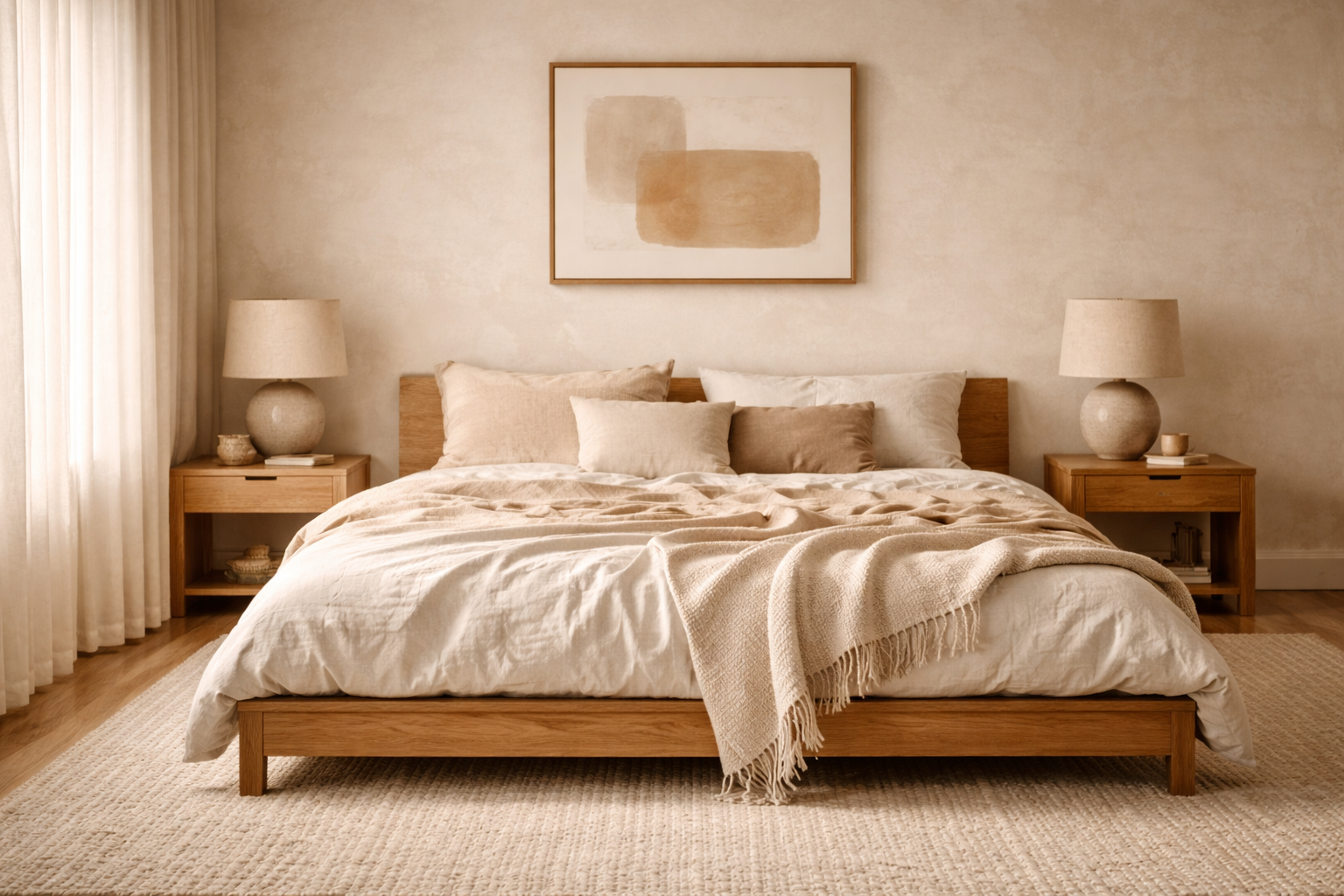
In the bedroom, organic minimalism creates a cocoon of warmth and calm — the perfect retreat from the outside world.
The Bedroom
The bedroom is where this trend shines brightest. Think linen bedding in warm cream or sand tones, a low wooden bed frame, and minimal nightstands with organic shapes. Keep lighting soft and warm — think table lamps with linen shades rather than overhead fixtures. The goal is a room that feels like a quiet exhale at the end of the day.
The Kitchen
In the kitchen, organic minimalism means moving away from the all-white, all-subway-tile look that has dominated for a decade. Instead, warm wood cabinetry (or painted cabinets in sage, warm greige, or clay) pairs with honed stone countertops and open shelving that displays handmade ceramics and simple glassware. Hardware shifts from chrome to brushed brass or bronze.
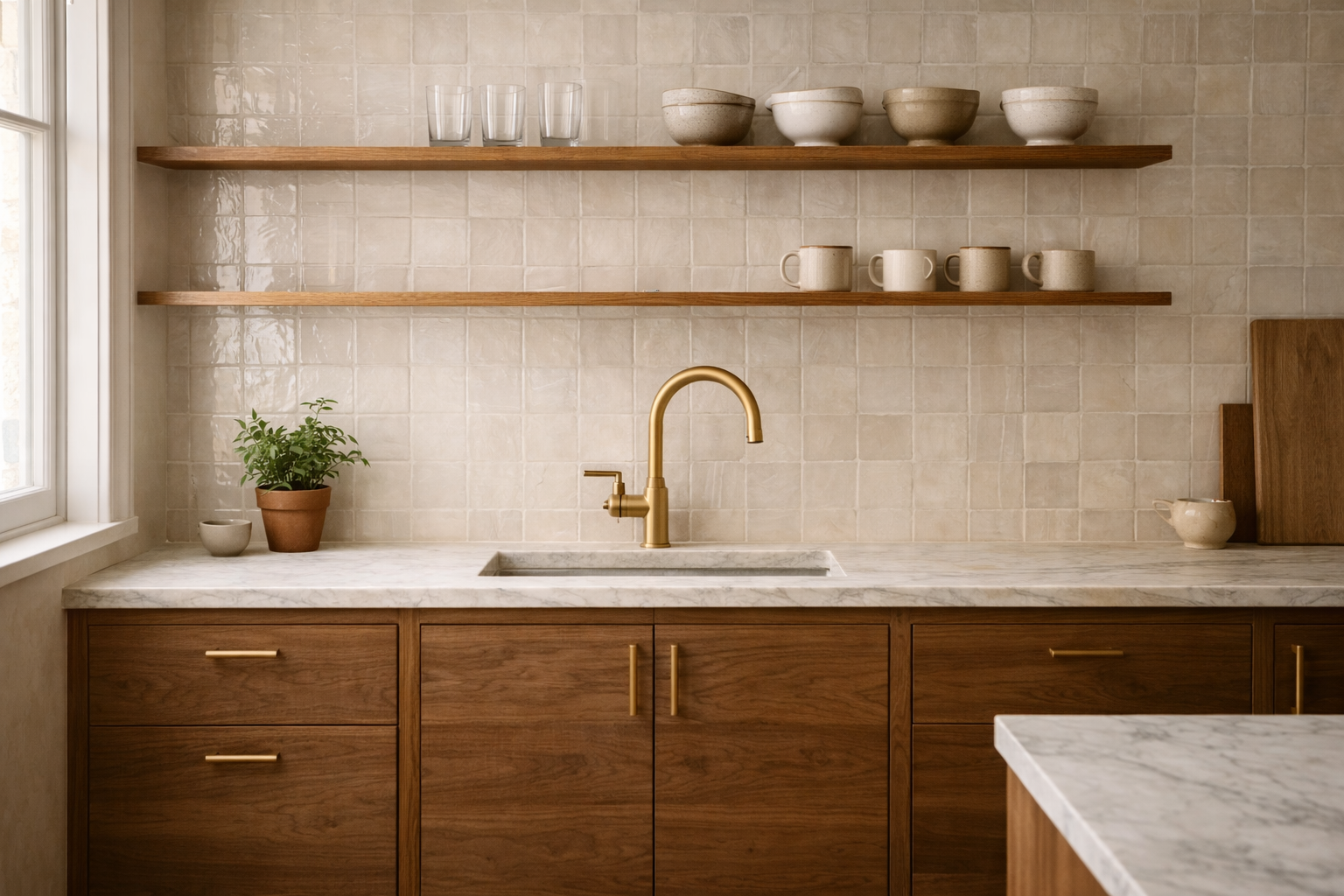
Warm wood cabinetry, natural stone, and brushed metal hardware bring organic minimalism into the heart of the home.
6. Five Simple Ways to Start Today
You don't need a full renovation to embrace this aesthetic. Here's where to begin:
- Swap your textiles. Replace cool-toned throw pillows for warm, textured options in linen or bouclé.
- Introduce handmade pieces. Replace one or two shiny accessories with handmade ceramics or a sculptural wooden object.
- Ground with natural fibers. Add a jute or sisal rug to your main living space.
- Warm your lighting. Switch to warmer light bulbs (2700K or lower) to immediately change the mood of a room.
- Edit with intention. Keep fewer objects, but let each one tell a story.
7. The Bigger Picture: Why This Trend Has Staying Power
What makes organic minimalism different from a passing trend is that it's built on principles that don't expire. Comfort, quality, craftsmanship, connection to nature — these aren't fads. They're fundamental human needs that design is finally catching up to.
The most enduring interiors aren't the ones that are "on trend." They're the ones that are authentic — spaces that reflect how the people living in them actually want to feel. Organic minimalism gives you permission to have a beautiful home that still looks like someone lives there. And in 2026, that might be the most refreshing design idea of all.
Frequently Asked Questions
What is organic minimalism?
A blend of modern structure and natural softness: the pared-back silhouettes and open layouts of minimalism, wrapped in warm neutrals, raw wood, stone, linen, and sculptural curves. Think modern bones with nature layered on top — minimal, but never flat or sterile.
What colours define organic minimalism?
Complex neutrals: warm creams and oatmeal, mushroom and taupe, terracotta and burnt caramel, olive and sage green, with muted teal as a sophisticated accent. Deep burgundy and oxblood are emerging as grounding accents for bolder rooms. Stark white and cool grey are out.
How is organic minimalism different from regular minimalism?
The restraint is the same — fewer, better things — but the execution is warm instead of cold. Texture replaces pattern, imperfection is celebrated rather than hidden (the wabi-sabi influence), and materials are chosen for how they feel as much as how they look.
What materials should I buy for this look?
Solid wood in warm tones (walnut, oak), honed natural stone with visible veining, linen and bouclé upholstery, handmade ceramics and clay vessels, jute and sisal rugs, and brushed or patinated metals like bronze and aged brass.
How do I get the look without renovating?
Five moves: swap cool-toned cushions for linen or bouclé in warm tones, replace a shiny accessory or two with handmade ceramics, ground the room with a jute or sisal rug, switch bulbs to 2700K or warmer, and edit down to fewer, more meaningful objects.
Discover your perfect space. Subscribe to LivingFinds for weekly interior design trends, tips, and style guides delivered to your inbox.

LivingFinds Editorial is the staff byline for guides produced collaboratively by our writers and editors. These pieces — brand roundups, trend reports, and style explainers — go through the same verification standard as our individually bylined work: every certification claim is checked against the issuing body's public registry, pricing is confirmed with the manufacturer at publication time, and no ranking is influenced by payment or affiliate relationships. We update editorial guides when brands change their materials, pricing, or certifications, and note the update date on the article. If you spot something out of date, tell us through the contact page — corrections make the guides better for everyone.
Related Articles

Japandi Bedroom Essentials: A Calm, Warm Retreat
The 8 essentials of a Japandi bedroom — from low platform beds to warm lighting — and what to leave out to keep it calm.

How to Style Curved Furniture at Home
Curved furniture is 2026's defining shape. Here's how to style rounded sofas, tables, and chairs room by room.

The Complete Lighting Guide: How to Layer Ambient, Task, and Accent Light
Good lighting is the most overlooked element in interior design. Learn the three-layer approach that designers use to make every room feel right.

Japandi Style: A Practical Guide to the Japanese-Scandinavian Aesthetic
Japandi blends Japanese wabi-sabi and Scandinavian hygge into a design philosophy built on simplicity, natural materials, and intentional living.

Organic Modern Living Room Ideas for 2026
The 2026 take on organic modern living rooms — warm palettes, curved furniture, layered textures, and the rules that actually make it work.

10 Must-Have Interior Decoration Products to Transform Your Home in 2025
Looking to refresh your home decor? Discover 30 hand-picked interior decoration products for every room, including trending items for small spaces, boho vibes, and minimalist designs.